
Medical cost trends in 2027 are not easing. If anything, they are accelerating in ways that are forcing both employers and health systems to fundamentally rethink how they structure their relationships.
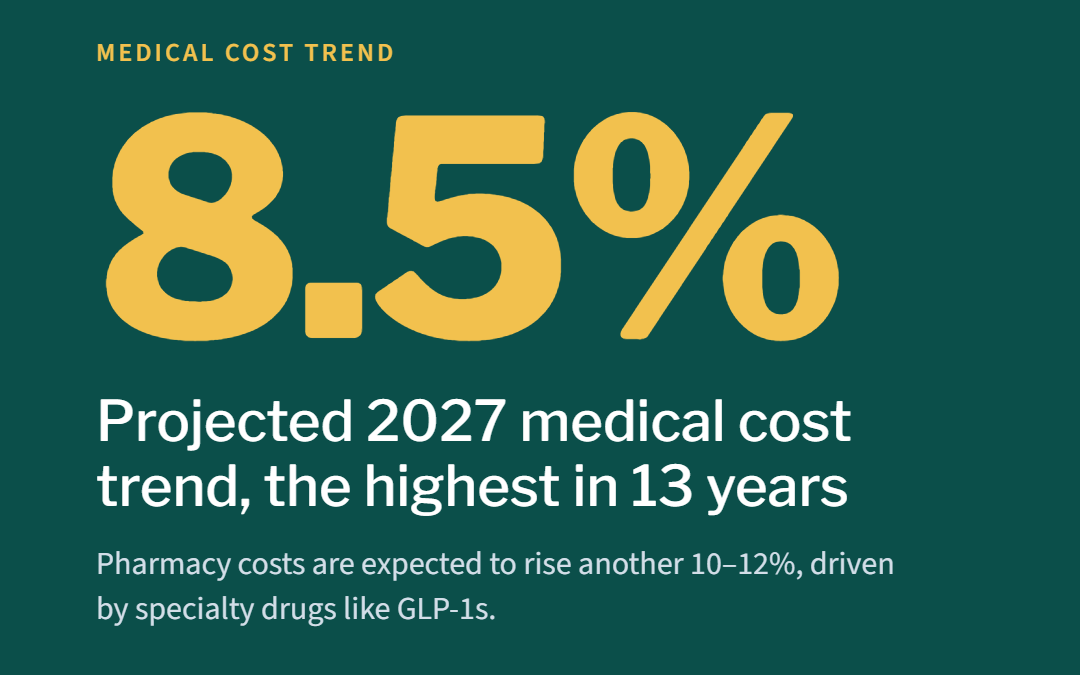
According to a market outlook report from World Insurance Associates, medical cost trend for 2027 is projected at 8.5% — the highest sustained level in 13 years. Pharmacy costs are expected to increase an additional 10 to 12% over the same period, driven in part by the rapid expansion of specialty drugs, including GLP-1 medications. A U.S. News & World Report survey of 58 health and nutrition experts ranked the expanded use of GLP-1 medications as the single most impactful health trend of 2026, with 52% of panelists citing it as their top choice.
These pressures are not landing evenly. Employers are facing hard decisions about benefit design, while health systems are managing historically thin margins alongside significant inflationary cost pressures of their own. The dynamic creates genuine tension — but also an opportunity for a new kind of partnership.
The Capital Analytics Associates Healthcare Trends Driving Transformation in 2026 report, published in June, notes that quality, compliance, and regulatory risk mitigation are now among the top priorities across the care continuum, from acute to post-acute. Linda Ward, president and CEO of Gulfside Healthcare Services, captured it well: the operational demands created by evolving regulations and cost pressures are significant, and organizations that are not actively managing them will find themselves at a disadvantage.
What I have observed over many years in this industry is that the health systems that thrive during periods of financial pressure are the ones that come to the employer market with a differentiated value proposition — not just a competitive rate, but a demonstrated ability to manage population health, and produce outcomes that employers can see and measure. That is not a soft sell. That is the foundation of a durable commercial relationship.
The cost environment is not going to improve on its own. But health systems that invest now in the data infrastructure and employer engagement capabilities needed to tell a credible value story will be far better positioned when the pressure intensifies.
To explore how Applied Health Analytics can help your health system build that story, contact us or schedule a demo at your convenience.
Sources: World Insurance Associates, “2026 Employee Benefits Market Outlook Report”; U.S. News & World Report, via Advisory.com, “The Biggest Health Trends in 2026,” January 2026; Capital Analytics Associates, “Healthcare Trends Driving Transformation in 2026,” June 2026.
Recent Comments